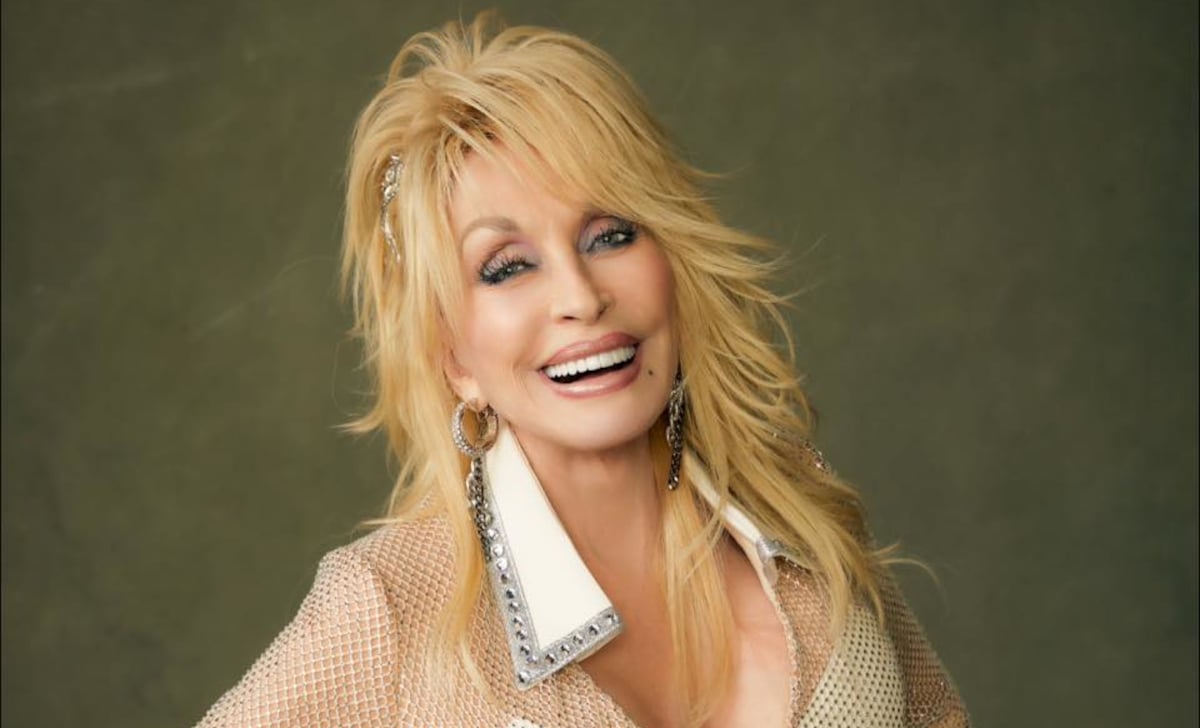
Of course there’s no real threat of Dolly Parton being “canceled,” either now or really at any time. Parton has deftly navigated her career to become one of the few Americans above reproach.
The post Latest Dolly Parton Cancellation Attempt Caused By False ‘Threads’ Post first appeared on Saving Country Music.
Could it be that times are changing? The once indestructible MAGA coalition seems to be fracturing, and even on the left there are about a dozen books out there now critiquing this so-called “wokeness” not from a left-leaning perspective.
Sure, there are the die-hard true believers still pushing their agendas on both sides, and maybe it’s just wishful thinking on my part, but I don’t think Dolly Parton will be cancelled. I predict this will go nowhere.
I think people are just sick of all the politicization from both sides and just want to live their lives without propaganda getting rammed down their throats at every turn. Nothing is sacred anymore and it sucks. People just want to watch football and eat chicken sandwiches and drink Budweiser without it all getting all politicized to hell and back. I really do feel like there is a shift. Everyone’s tired of it.
I recommend watching the Barbara Walters interview with Dolly from 1978. It perfectly contrasts the wonderful, talented and grounded Dolly Parton against the establishment (borderline snickering) Walters. Dolly comes across great, Barbara not so much.
The irony here is that the quotes that got misappropriated and smashed together in this instance come from a portion of Dolly new book where she explains how she learned very early on how to navigate the media and public sentiment to keep her nose clean. She’s saying she learned from the mistakes of Cass Walker, while also learning from the things he did right.
It is the job of the media to not be star struck by the subjects they cover, to be objective, if not outright adversarial. But when it comes to Dolly Parton, there seems to be almost an obsession with tearing down a facade that doesn’t exist in the same way many people perceive it does. Yes, much of what Dolly Parton does has a marketing element to it, especially her altruism. But that doesn’t mean that Dolly Parton still isn’t a good person. Also, she almost always happens to be the smartest person in the room. Being underestimated due to her appearance has always been Dolly’s strength.
This article feels like bait on a beautiful Saturday, so all ill say is the only real attacks on Dolly I see come from a those that have a problem with her supporting covid vaccine research, and medicine and science in general, from the group of people that have told all of that is bad… that and I see much larger accounts share fake quotes from everyone from Marty Stuart to Chris Stapleton about Beyonce and Country Music clearly designed to get a rise out of certain people.
As explained in the article, Dolly Parton gets attacked on the right as well, and often due to the same motivations of wanting to destroy the universal appeal around her because that’s problematic to people who want to divide and conquer.
We’re all the victims of our selective information feeds at the moment. That is why issues like the ones raised in this article are so pernicious and important.
In the history of the world, nobody has ever spent hours looking into an involved and convoluted issue like this one, then spent even more hours composing 1,200 words about it, and posted it with the intent to “bait” anyone into anything. That would be a dramatic misappropriation of time and resources. Similar accusations came from a recent article I posted that was titled “Album Review – Artists Name – Album Title.” Click bait is the posting of articles with the express purpose of mining clicks, or deceiving the public about the nature of the content to get them to click. In these instances, the less words, the less time you spend, the better. So that way you can spend more time making more click bait.
Your linked reference for this does not actually back up your extremely strong (and weird) claim. Simply because something is written by someone in academia does not make it academic, and this was not published to an academic journal, but a non-fiction magazine.
This is a really wild statement, made without any evidence. (“White identity” such as it is, doesn’t really requiring “breaking” as it is absurdly fragile — it’s a phantom defined by what it is not. Its difference is defined through racist delusions regarding other groups.)
BTW–There was a story on the Internet this week about a circuit court judge in Missouri who has an obsession with Elvis Presley, to the point of impersonating him while on the bench–and was brought up before the judiciary on misconduct charges, for this behavior . (He agreed to retire, rather than contest the charges.)
It’s a huge country and there and some colorful judges and colorful teachers. You could probably find some who impersonate Dolly Parton–both female and male–on Halloween, or even on other days of the year. I’ve not researched it, but I would bet that most references to Dolly Parton in writings by academics have been favorable (to the extent that they would qualify as eithr pro or con).
I agree that the supplied link just scratches the surface of the opinion shared in this article. And since it was from seven years ago, it’s pretty outdated. I also agree this topic probably deserves further explanation.
That said, I stand behind the assertion in the article that a weird obsession in certain segments of Academia, the media, and amid online cultural warriors on both sides of the political divide to erode the nearly universal appreciation for Dolly Parton since it stands as an impediment to sowing discord. This is a very real phenomenon, including academic dissertations on Dolly constituting their own genre of literature. That is very much why this particular situation went so viral on Threads, it dominated the entire platform in a manner perhaps no other topic has before.
In Trigs defense you can go on Google Scholar and search “Dolly Parton” and there’s hundreds of academic works out there on Dolly and her part in gender, authenticity, societal norms, etc. Just skimming over them there does appear some may be critical of Dolly in some capacity
As an artist that has decidedly not tried to make her music, her career, her identity, or her legacy political, an entire cottage industry has emerged attempting to do these very things, and that was the reasons this post on Threads went viral.
Not only is there tremendous conversation in Academia and media about the legacy of Dolly Parton, there are conversations about those conversations. It’s a downright obsession of some.
I might say that Reba McEntire has has decidedly not tried to make her music, her career, her identity, or her legacy political. Dolly’s a somewhat different story. Her primary persona–the woman with the huge blonde hair, form-fititng dresses highlighting her upper endowment, etc., Mae West-type jokes, iis as much a stage act Minnie Pearl.
But she’s also been a strong supporter and advocate for gay rights, and for awhile seemed on the verge of or teased about coming out, herself. Like it or not, that’s seen as political–or culture war–as there was a sharp divde on gay rights between urban/ blue state and rural/red state America on that issue. And that’s why she’s popular among a lot of urban liberals who don’t necessarily even listen to her music.
Controversies that allegedly “go viral” on the Internet often driven by the extremist fringes. Progressives who read Media Matters and believe that the New York Times and Bill Maher are right wing and Trump-supporting, and right wingers who belive that Fox News is anti-Trump and liberal. (Trump himself will say that, after pooaching Fox news for half his cabinet and staff.) In that world, you’ll find “progressives” who can get ginned up to accuse Dolly Parton of being a racist.
None of that suggests any sort of ‘cancelling’ of Dolly or looks like trying to ‘take Dolly down’. If you actually read the abstracts, they seem to be almost universally positive.
This quote from Mountains of Contradictions:
“In popular magazines, Parton is often compared to Mae West, Marilyn Monroe, Bette Midler and Madonna for her manipulation and burlesquing of femininity, yet there is something unique about Parton which resonates with a more rural and/or working-class audience than any of these other stars, and which seems to strengthen her appeal as a popular hero/role model rather than a comedienne or mere visual icon. As a fluent and articulate promoter of her own image, Parton provides a fascinating case study for the construction of a star image that mediates the often contradictory ideals of gender, region and class.”
This paragraph from The Parton Paradox:
“This thesis shows how Parton established a distinct career that catered to different audiences as she traversed the musical color line and repackaged what feminism looked like to country music fans during the Women’s Movement of the 1960s. Placing Parton’s actions in conversation with music’s color line demonstrates how she embraced racial and musical diversity, not just within her music, but also on her television shows of the late 1970s and 1980s. This analysis also examines Parton’s career in relation to the Women’s Movement by looking at the ways in which she used her position and popularity as a country and crossover entertainer to chip away at the traditional structure of country music. Parton presented herself as a more palatable feminist to country music fans and used her image as the genre’s buxom blonde to distract her audience from her messages of gender equality.”
This section from the abstract of Some are Preachers, Some are Gay
“This project uses a critical understanding of genre to explore how Dolly Parton articulates LGBTQIA+ belonging within country music. Parton is recognised as an LGBTQIA+ ‘icon and ally’ (Barker, 2022a, p. 144) in a genre that has been perceived as homophobic, and lacking LGBTQIA+ participation. Using queer theoretical and methodological approaches, the work is rooted in an understanding of the genre’s aesthetics and affective logics.”
The abstract for Femininity, authenticity and hillbilly heritage
“This thesis will analyse the star image and persona of the American country music icon Dolly Parton, as constructed through her visual representation. With a career spanning five decades, her ability to adapt to the immense changes in popular culture during that time has earned Parton the reputation of being a uniquely resilient star. This thesis will distinguish the reasons for her enduring popularity, focusing on three main aspects of the artist’s persona; that of her Appalachian heritage, her perceived authenticity and her extreme manifestation of feminine ideals. This thesis aims to establish that Parton’s honesty about her background, her fixed tastes and value system, charming personality and shameless artificiality are what has allowed her star image to maintain its potency over the course of her career. The themes and arguments presented will be supported by visual evidence from Parton’s album covers and public appearances, as well as her social media platforms.”
The most negative sounding words in your list of titles merely suggest that she is unpredictable, complex, and complicated, which is a pretty fair description of any human, but Dolly in particular. Her stage persona is is very big and gaudy and made up, but when she talks she’s very down to earth and personal. She sings about her poor childhood and that has made her very rich. There is certainly a cultural expectation that there is less openness to the LGBTQ community in rural communities, yet she is a gay icon. There is a cultural association between being rural and being ignorant, and Dolly has her book program. She manages to have both very conservative fans and very liberal fans. She sings about her faith while dressing in ways that lots of preachers might rail against. She jokes about how expensive it is to look so cheap!
To look at that list of titles and see any efforts to cancel Dolly is really a stretch. And of course, if you just take the first 10 results without filtering for point of view, you also get Smart Blonde: The Life of Dolly Parton, She come by it natural: Dolly Parton and the women who lived her songs, “I may look fake but I’m real where it counts”: Positivity and authenticity in the songs of Dolly Parton, and Making sense in the city: Dolly Parton, early reading and educational policy‐making.
It was my mistake to broach this contentious subject in this article in such a sidebar manner. However, my assertion about Academia’s obsession with Dolly Parton, and using her as a cultural refraction point, and specifically referencing race, sex, gender, and other identity and political concerns stands. I did not choose to use Google Scholar to substantiate those claims. That is what someone else used, and I simply agreed this was a way to illustrate this Academic obsession. I could go through the abstracts of those works and make them substantiate my claims as well. But again, that is not the data set I specifically am referencing.
Again, this really is a subject that needs to be dealt with in a more dedicated manner, and unfortunately, I do not have that time right now, nor the inclination to do it in comment reply form. But make no mistake about it. It is my belief that the very regular attempts to “cancel” Dolly Parton are spurred from people who see Dolly’s position as someone with universal appeal as problematic to their attempts to divide Americans to increase their cultural cachet, and this has specifically manifested within Academia.
Dolly Parton BETTER NOT be cancelled.That American treasure is about the only person about whom both left (i.e.,Yours Truly) and right (many others on savingcountrymusic.com) agree.
IIRC, didn’t Meta pull the “if you have Instagram, you automatically have a Threads account”? Or something similar. I remember Threads got a boost (like Bluesky and Mastodon did as well) in the wake of lots of folks leaving X/Twitter, but it seems that how it has sifted out is the hardcore nerds have landed at Mastodon, left-leaning or left-wing journalists have landed at Bluesky, lots of people begrudgingly went back to X/Twitter, and then you have the “I love using the term brand synergy every chance I get” folks have landed at Threads just re-tweeting Coca-Cola ads.
Usually how it goes.back in the day a false report on the front page of the newspaper.the retraction in the back with the classifieds.a 5 minute feature on the news broadcast a 30 second correction before sports three days later.not a more humble,giving person than dolly especially of her stature.
The most important thing to remember in cases like this is that the past shouldn’t be judged solely through the lens of today’s cultural and political standards. If her uncle used racist language 70 years ago, that reflects the norms of rural Tennessee in the 1950s, where such language, unfortunately, was common. That doesn’t make it right, but it does help explain the historical context and the mindset of the time. It’s also important that she clearly distances herself from that behavior in the book.
You’re right that there are activists who are eager to label even widely respected public figures as racist. When the label is applied too casually or broadly, it loses meaning, dehumanizes people, and shuts down honest conversation and makes it easier to commit physical violence against anyone who remotely looks like Dolly
Maybe ‘cuz I’m old or maybe I’m not as addicted to the phone as the rest of the world but this can’t be that big of a deal if the first time I’m hearing about it is this article . . . Been a Dolly fan since I first heard Jolene as a kid and I can’t think of anyone sweeter or classier. Can’t imagine this would be that big a deal except for people bent on trying to get money / clicks through controversy.
Russ
Just look at Leonard Cohen, Dean Martin, Jim Reeves, Buddy Holly, Rick Nelson and so many other towering figures who used to be household names within and outside of their specific genre. Hardly anyone under 70 knows them these days. And Kenny Rogers, who was every bit the all-over star as Dolly during the 80’s, faced a cultural oblivion long before his death. Country giants like Merle Haggard, Waylon Jennings and George Jones didn’t even survive the 80’s. Mention any of those names to a 40 year old person, and chances are he might – might – have heard about Cohen, at best.
We, the fans of older country, will always remember the giants, but the average public won’t. The small kids of today won’t grow up and be familiar with Elvis, Sinatra or the Stones, just like our generations (say, those born between 1970 and 1990) isn’t familiar with Jimmie Rodgers, Benny Goodman or Gene Autry, huge stars of their time.
That’s how it is. Musically, Dolly is already a has-been, known more for her hilarious old-age look rather than for the excellent music she gave us before she became a parody in the mid-70’s.
A small fraction of music nerds will always discover the old artists, as long as the music is available. That’s the danger of digital music. Like vinyl, 8-tracks and CD’s, age may erase the files. If nobody keeps them circulating, they will be gone from the web eventually.
Where is Cash? I don’t know. They recently put a statue of him in the Capitol rotunda. Dolly just might get the same. I think you’re being especially cynical for effect. Dolly is pretty revered the world over.
Cash had the dark aura that always draws a lot of attention (Bonnie and Clyde, Billy the Kid), and therefore he became a beacon for every wannabe tough guy out there, from the punks to the gangbangers and the goths. But, statue aside, he’s no longer a relevant icon for the hip crowd of today, unlike back in the late 90’s/early 00’s. This is a fact, and not cynism.
100 years of recorded music, quite a few from back then still lingers (mostly doom-ladden blues guys, a few pop singers, some jazz cats), but from the last 70 years? Elvis, the Beatles, the Stones, Dylan… not too many from the late 50’s/early 60’s musical boom are well-known among the tweenies now in 2025. The survivors from the 70’s are totally passè and (mostly rightfully) totally ignored.
The death of the radio equals the death of the legend. Everybody caught a Bing Crosby, a Cash or a Springsteen through the waves now and then. Today the majority listen through buds, playing the “top 10” playlist of a chosen genre/outlet/channel. Those guys won’t discover Black Sabbath, Chris Rea, Garth Brooks or Dolly accidentially, as we could back then when most radio channels had a huge variety of music during a day and a night. Nowadays it’s mostly nichè.