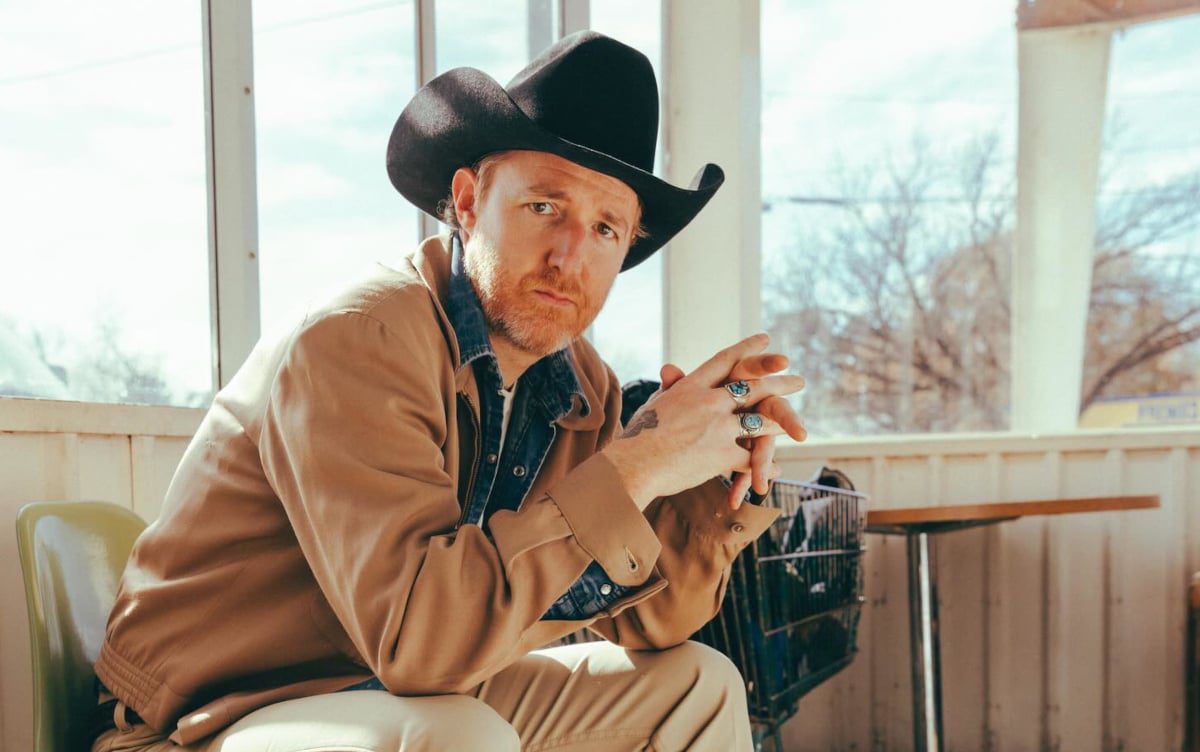
An exceeding about of noise is exactly what Austin-based songwriter Jonathan Terrell has been making after his 2020 album Westward was pulled from streaming recently due to these false claims.
The post Jonathan Terrell’s Album Was Pulled From Streaming. He Took It Personal first appeared on Saving Country Music.
The technology dystopia that we appear to be hurdling towards has taken some troubling turns in 2025, especially when it comes to independent artists trying to disseminate their music to the public. Along with AI and outright digital song theft, one major issue that has emerged for independent performers is getting their albums yanked from streaming platforms due to false claims of streaming fraud. The results are punitive, and often presented as permanent. Performers receive an email notification that one of their songs or albums has been flagged for paid-for streaming activity, and then the album is removed from all streaming services with no recourse, no humans to reach out to, and no real dispute resolution protocol to move forward with. Artists and labels paying for fake streams is a very real problem, and this issue is the result of streaming services attempting to address it. But independent artist who would never engage in this type of practice are becoming the collateral damage in the fight against streaming fraudsters who use legitimate tracks to try and insulate the paid-for performers from getting discovered. In September, it was The Piedmont Boys and Cam Pierce who had albums taken off of streaming services due to these bogus streaming fraud claims. Luckily, after Saving Country Music reported on the matter, both albums were reinstated. Then later in September, it was Grayson Jenkins and Anna Wescoat who were highlighted. Luckily their albums were reinstated eventually as well. But it often takes an exceeding amount of noise to rectify these false streaming fraud claims. An exceeding about of noise is exactly what Austin-based songwriter Jonathan Terrell has been making after his 2020 album Westward was pulled from streaming recently due to these false claims. But he’s decided to not just make this about himself. After sharing his story, other artist whose music had faced similar fates spoke up with similar stories. Since many of them didn’t have the same resources Terrell does to address the situation, it inspired him to tackle this matter head on not just for himself, but for the Austin music community, and independent music at large.
“Yes I was pissed off and confused when they pulled my record. It was frustrating,” Terrell explains to Saving Country Music. “But then when I posted about it, I watched a hundred of my friends and music community in Austin and all over the place say, ‘This happened to me, and I went back and forth with them for weeks and months, and never put my album back up because I was overwhelmed.’ And all of these people are independent artists.” In the comments of Terrell’s original Instagram post on December 8th, artists Ian Loveless, Eric Hagen, Erick Willis, and Craig Bowen were just some of the performers who piped up and said they’d experienced the same or similar issues. Often TuneCore is the distributor of the music that gets targeted, but not always, while Spotify is the streaming service that issues these takedown notices. “I feel lucky that I do have contacts at TuneCore and Spotify that I can call,” says Terrell. “Whenever I saw everyone else … I specifically went through the proper channels that anyone else would, because I want to know everything that they would have to do when they don’t have a phone number for somebody.”Terrell’s social media posts made so much noise, TuneCore responded directly, which is rarely the case. It was the response Jonathan Terrell received from the music community that got TuneCore to pay attention. Luckily on Tuesday (12-9), the record was reinstated.
Terrell then used this experience to create a PDF (see below) that he is sharing with anyone who is going through similar issues. On Wednesday night (12-10), Terrell also used a performance at High Noon on Caesar Chavez in east Austin to perform the songs from his pulled album Westward, and to hold a sort of symposium for the Austin community to discuss the situation, and what to do when your album is pulled. “I’ve spent my whole career punching up. This is nothing new to me,” Terrell says. “TuneCore has been helpful, but it is pretty wild how quickly they rolled over for Spotify. I feel like they started communicating when dozens of people started speaking up and reposting stuff. It’s almost like the Diddy documentary. One person says something, and then 100 people also go, ‘Yeah, that happened to me as well.’” Austin musicians including Aaron McDonnell, David Ramirez, Nick Garza, and others were in attendance at High Noon on Wednesday night to support Jonathan Terrell, and show their solidarity over the issue.
“I feel very protective over the independent music community, and especially the Austin music community that has had my back since day one,” Terrell says. “They’ve been there for me through various bands and projects, personal things, whenever I had vocal cord surgery. People were sending me groceries when I couldn’t sing for seven months. That’s my community, so f-ck this s-hit.” Terrell was selling copies of his Westward album for “pay what you want” Wednesday night, along with his other merch and his new 2025 album Dove released back in September. He was also taking proceeds of sales to donate to HAAM—the Austin organization that helps provide health insurance and other services to Austin musicians. “A lot of boutique artists like myself, we thrive in a boutique world of listeners,” Terrell explains. “So this issue is just an extra nudge to makes some cassette tapes, keep making vinyl, because this is the real world of listening to music in its purest form. When I get to hand somebody a record I made, and I signed it, and I put all of my friends’ names on the record in the sleeve, and I hand it to a person, that is a whole journey you just passed off to them instead of just skimming through a playlist.” Along with addressing the takedowns of albums over false streaming fraud claims, what Jonathan Terrell and others are doing is showing how music communities can come together to support each other through the increasingly common technological turmoil plaguing independent music. Today it’s these streaming fraud claims that are taking the life’s work of performers and punitively removing them from the digital marketplace. Tomorrow it’s likely to be AI or some other unforeseen adversary. But music will still survive in-person, and on the local level, if nowhere else.
Bravo to Jonathan Terrell. The amount of time and effort Jonathan went through to get his music heard, and the number of artists who have been unjustly silenced, testifies to the reality that technology often promises freedom but delivers the opposite. I wrote about this in a book I published in 2016 (Not So Fast: Thinking Twice About Technology) and since then it has gotten much, much worse. Thanks to Jonathan for finding a constructive way to fight back.
Fifteen years ago, running bots to inflate MySpace plays could turn a Georgia kid into a major-label signing overnight. We all watched it happen. Once the suits at Warner noticed the momentum, doors f***ing swung open, and fast. That taught the industry a simple lesson: attention begets opportunity. Of course, everyone caught on, but what was done was done in a sort of “if you ain’t first, you last” fashion.
The problem is distribution of resources and influence. I don’t know if this guy’s team did or didn’t inflate any numbers, but I definitely don’t assume that marketing teams, potentially unbeknownst to the artists, have ceased to run a few bots here and there. They’re probably stuck doing all they can to expose the diamonds that lay buried beneath all the theatre and bureaucracy that runs the industry/ruins the soul of music.
Major labels and deep-pocket investors are just like lobbyists. They vote, they shape the rules, they hire the messengers, and then they amplify the message. Marketing teams with budgets know how to “run up the numbers” subtly through shit like playlist pitching, radio relationships, targeted promotion. Thes tactics are way too costly for independent acts.
So, imo, when they pull an album because of suspicious metrics, it’s not just about fairness to an individual artist; it’s about how unequal access to attention and verification tools skews who even gets considered
So is the real issue lack of outright fraud, or an ecosystem where those with money and connections can manufacture plausible momentum and the rest simply can’t compete? How do we bypass the gatekeepers to find the good stuff? I’d like to believe authenticity exists somewhere in country music and somehow it’s gonna be accessible to the rando lovers of music…
” I don’t know if this guy’s team did or didn’t inflate any numbers, but I definitely don’t assume that marketing teams, potentially unbeknownst to the artists, have ceased to run a few bots here and there.”
That’s not what’s going on with this artist, or the others I’ve highlighted through this issue whatsoever. They don’t have a marketing team. They don’t even have a publicist or label at all. Fraudulent streamers are putting independent tracks in playlists to attempt to insulate the playlists from being found out when fake streaming occurs. They target unrepresented artists because they know there’s less chance they’ll see the fraudulent activity on their end.
I see, my bad, I re-read and now better understand what you are revealing. So once these playlists are “found out” it’s really only the innocent musicians who are suffering damage as I suspect these third parties use throw away emails, VPNs etc? This is a pretty incredible story now that I’ve re-read it later in the day and not first thing before coffee. My original post does not fit, but I still stand by the fact that that is one layer independent artists have to overcome, with a big question mark on how especially if artists, like Terrell, are also expected to spend this amount of energy on protecting themselves due to these streaming service gaps and bad actors.
Yeah, the way that the playlist fraud works is that bot networks will create a playlist, populate it with the stuff they’re trying to promote, but also a few real artists to make it less obvious, and then use a bot Network to stream the stuff for a payout.
Tiny artists have been booted off of streaming services for a song being streamed like 750 or a thousand times total by some kind of streaming fraud scheme that has nothing to do with them.
Thank you, Stellar. It’s crazy times on the interwebs and streaming networks and AI… there are always people trying to stifle the hardworking, organic people, one way or another, and it really sucks. Kind of like a new mode, same ol’ story.
Liz Kelly’s book about Spotify, mood machine, makes the point that the founders of Spotify were just looking for some kind of advertising platform to sell ads on, and they considered music to be “cheap” content. Musicians are usually in a pretty powerless position in any business and it’s not surprising that it’s come to all of this.
Ai will be the final nail in the coffin for ‘real’ artists. I read an article last year about one company that had over 100 million Ai created tracks, a catalog that rivalled Spotify’s entire platform at the time. Soon those who love authentic music will be back to seeking out singer-songwriters in live settings, buying the music directly from the artists themselves. My guess is that there will be three or four giant companies that will own and create all the fake Ai music, music that will no doubt satisfy the masses who have always needed to be told what to like.
I don’t know, it is certainly possible this spells the “end” for “real” artists, but I also think that a not insubstantial portion of Americans hate this AI slop. Look at how McDonald’s was eviscerated this week for their AI slop Christmas ad. For all the deserved handwringing about AI songs on Country radio it is still unclear that people actually *like* those songs.
The White House and Big Tech will continue to push this crap on us – but I also think people are understandably giving pushback and in the end there will always be a big audience for folks that don’t want this AI slop being thrown at them.
Good points, Mike. I have a friend, an engineer and tech genius, who is part owner of a gaming company. Less than two years ago he predicted his business would be completely obliterated by Ai in three or four years. So far what he said was coming, is happening.
I said the some of the same things you’ve said to my tech friend. His reply? “The technology will be so good most people won’t be able to tell the difference.” He’s always been on the frontline of new technology, and in his own words, “wanted to see how far we could push it.” He’s not so optimistic anymore.
There will always be real artists, but when they are up against companies that have hundreds of millions of Ai created songs, releasing a track independently (the record labels will embrace anything that makes them the most money) will be like dropping a tea bag in the ocean. It’s already like this in many ways.
Who knows where all of this will lead? I can see myself sitting in a local bar & grill listening to a local performing acoustically. One guitar, one voice; it doesn’t get much better than that, in my opinion.
This is so F’ed up. These artists are just getting screwed at every turn. But…. I’m glad this story has a happy ending due in part to the community of music lovers that support these guys and ladies. It’s up to all of us to show up and buy their merch and help them out in times like this one. I can’t imagine how shitty life would be without all of these great independent artists we all love on this site. Speaking of which, and not to derail this article, but I was at Ben Chapman’s Peach Jam at the Basement East this week and he brought up a guy that stunned every single last one of the 400 people in the room. Dude named Preston James. Covered “With a Little Help from My Friends” and I’m telling you Ben’s band levitated, the crowd lost its collective mind, jaws dropped, and I’m pretty sure people fainted. Truly one of the few transcendent music moments I have ever experienced. Nothing on YouTube yet but go to Ben’s Instagram and there are plenty of reposts. AI can suck it. Ain’t never gonna be able to do what that guy did on that stage. Ever.
After some googling I believe he was on the show years ago. Don’t know about the signing though. Doesn’t have a ton of songs on Spotify and only a few of those give you a glimpse of the raw power and grit and soul in his voice. He really can rival Stapleton (and Joe Cocker for that matter) from what I heard in that room. Not sure why Nashville is hiding him under a rock.
Interesting. I agree, what is recorded and accessible online is not the story you gave… but I believe you and curious because Warner will totally shelf a good album if it doesn’t fit their current agenda
Trig, I was gonna ask you if you ever found out why Disappearing Girl disappeared from Spotify and then found this post which tells that, indeed, it is for the same reason as all of the above:
So I mentioned that she was another victim of this in the article I did about Grayson Jenkins and Anna Wescoat. I did reach out to her both directly and through a publicist to try and talk to her about it, and never got a response. I did breeze through her social media stuff to see if she addressed it, but I guess breezed over that post. I appreciate you bringing it to my attention. I do wish she would speak to me about this, because if I write a story about it, I probably can get it reinstated. Now that I have a statement from her, that might suffice.
Thank you shedding some light on this and being so thorough. This is a real issue and artists need to arm themselves with the “know how to fix this” more than ever. I really appreciate you jumping in the scrap
Source: savingcountrymusic.com