But what Billboard failed to mention whatsoever is how there’s an actual modern Outlaw country scene, as well as an Outlaw country sound that isn’t really that hard to find.
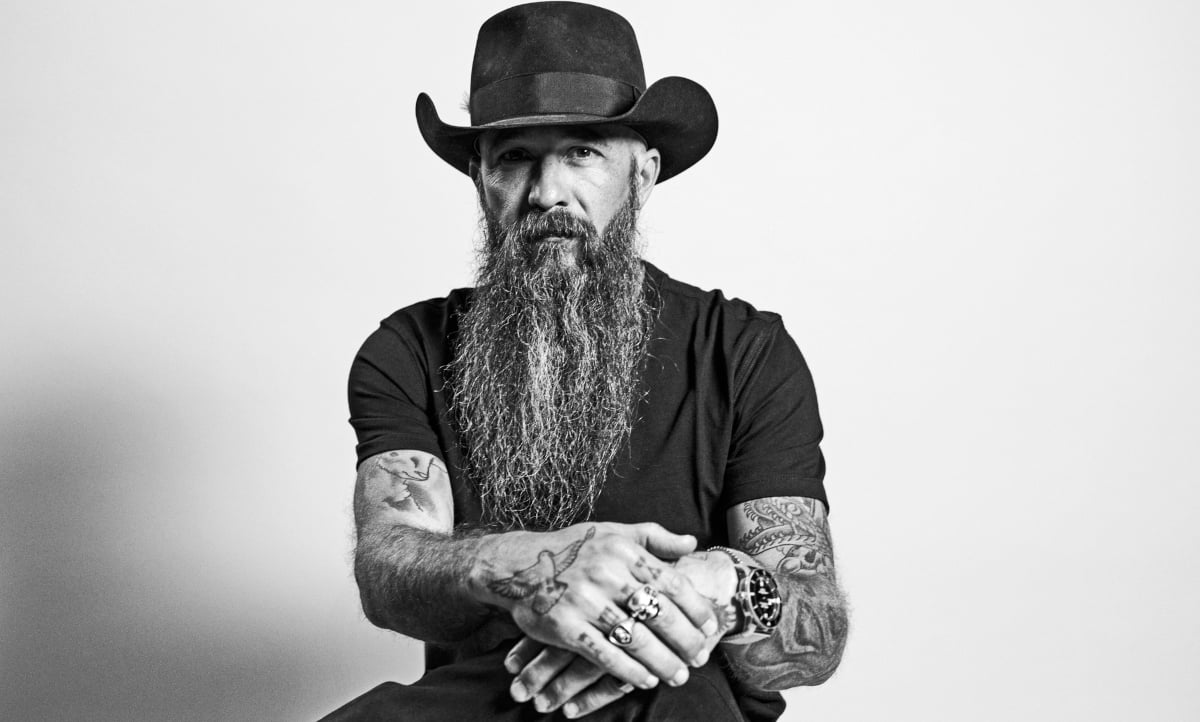
What exactly a country music “Outlaw” is has always been up for some debate, just like who exactly is or isn’t “country.” And often, these debates can turn exhausting. But it seems pretty obvious that you probably wouldn’t consider artists such as Jason Aldean, or Luke Combs, or Zach Bryan as “Outlaws” by most anyone’s definition … that is unless you were Billboard. On March 10th, Billboard ran a feature that covered the country music Outlaw movement via two separate events that happen to be coinciding. The first is the 50th Anniversary of the Wanted: The Outlaws compilation that was released on January 12th, 1976. It became country’s first Platinum-selling album, and helped spark the Outlaw era. Then there was the premier of the new documentary The Called Us Outlaws at SXSW Sunday evening, March 15th in Austin. In the Billboard article, writer Tom Roland asserts, “[Steve] Earle, with his gruff ‘Guitar Town,’ revived the outlaw vibe in the next generation of country acts, but he was hardly alone at carrying the flame forward. Jamey Johnson, Jason Aldean and Eric Church all emerged in the 21st century’s first decade as self-styled artists making music that cut against the grain.” Roland then goes on to say, “Other modern-day outlaws include Luke Combs, Zach Bryan, Corey Kent, Red Clay Strays, Stephen Wilson Jr. and Miranda Lambert, not to mention most of the Texas red-dirt artists and the country-centric acts that are classified as Americana.”But what Tom Roland failed to mention whatsoever is how there’s an actual modern Outlaw country scene, as well as an Outlaw country sound that isn’t really that hard to find. It’s embodied by artists like Cody Jinks, who’s a major performer with multi-Platinum songs that’s headlined big festival across the United States. There’s performers like Whitey Morgan and the 78’s who very directly keep the sound and spirit of Waylon-style Outlaw country alive. Ward Davis, Dallas Moore, and Peewee Moore are some other modern Outlaw artists. The last album from Kelsey Waldon called Every Ghost had a lot of Outlaw influence on it. There is a defined “scene” that these artists exist in. Dale Watson could also be considered an Outlaw, and when he was operating his annual Ameripolitan Awards, “Outlaw” was one of the categories, recognizing performers like the ones previously mentioned, as well as Rachel Brooke, Summer Dean, Sarah Gayle Meech, Hank Williams III, Darci Carlson, Mike and the Moonpies (now Silverada), and more. But none of these artists were mentioned by Tom Roland in Billboard. This inspired Cody Jinks to take to social media and issue the following missive:
This is some interesting writing by someone that did a little studying on country music and wrote an article. The celebration of The Outlaws record is certainly warranted! Kudos to Billboard for that.
The rest of the article is garbage. The only “modern outlaw” to make the list is Jamey Johnson. Jamey actually told his label to Eff Off! I love the rest of the artists on that list and have played with them but they are not outlaws. There are not any new outlaws, these artists are still on labels that control everything. There are simply signed and indie artists today.
So, no disrespect to the amazing artists named here, you are all awesome. Billboard might want to hire a writer that knows more about country than this entry level drivel. Billboard and the record labels continue to screw it up. What else is new?
Tom Roland happens to be one of the most senior writers and editors working in the country music business today. He’s been the editor of Billboard Country Update since 2010, and was the senior music writer for The Tennessean before that. He also operates the country music date database rolandnote.com, and generally speaking, is highly respected in country music media. But Cody Jinks is completely right to criticize Tom Roland’s blind spot when it comes to modern-day Outlaws. It comes from a very Nashville, major label, radio-centric perspective. One of the problems with the modern information space is that many journalists and outlets are siloed into a myopic perspective. When these blind spots do persist, it’s important they reach out to someone with more on-the-ground knowledge to inform their reporting. Tom Roland’s probably forgot more about country music than most of us know. He just didn’t know anything about the actual modern Outlaw scene. This same concern has been cited about the new documentary They Called Us Outlaws that despite interviewing some 130 total artists so far, also has not included Cody Jinks or any of the other aforementioned modern Outlaws. On Sunday evening (3-15), Saving Country Music attended the premier of They Called Us Outlaws, which consisted of a 2-hour prologue compiled from the greater 10-part documentary series. It was an excellent, thorough, involved, informing, and entertaining presentation. A full review of the premier is forthcoming. Director Eric Geadelmann told Saving Country Music afterwards that he had not reached out to Cody Jinks yet to be in the film, but they are still taking the next six months to finish the project before it’s officially distributed. Geadelmann also said, “I’m not calling anyone an Outlaw.” Just because someone is in the film doesn’t mean they should be considered an Outlaw country artist, only that they were interviewed as the filmmakers followed a trail of performers and players who helped tell the Outlaw story. They wanted to include more present-day artists, and performers from the mainstream to help entice viewers to the story about what happened during the Outlaw era, and why it was so important. It’s also important to point out that Outlaw isn’t just an attitude, nor is it just a business or creative approach. From a strictly musical standpoint, there is actually a sonic identifier to Outlaw country. When the Grammy Awards recently made a new Best Traditional Country Album category, they listed some specific subgenres this category also included, and specifically named Outlaw as one of them. The two-tone bass line, the steady beat bass drum, phase guitar, and other such sonic signifyers also go into defining the Outlaw sound indicative of the ’70s decade in country music. There’s often a rock edge to the music. There are also physical identifiers of “Outlaw” like the black vest and the long beard. Yet as Cody Jinks said in his statement, “There are not any new outlaws.” Jinks might not even consider himself an Outlaw, even though he might be the biggest independent artists out there without any label or corporate support, and embodies many elements of the modern Outlaw sound and image. The prologue for They Called Us Outlaws that premiered at SXSW started off with numerous performers saying how much they hated the term, most especially Waylon Jennings, speaking to the polarizing and confused nature of what exactly “Outlaw” is. “At the end of the day … It’s not a f–k you to the industry. It’s an exploration of what it means to be an artist and follow what’s inside yourself,” is what film creator Eric Geadelmann told Billboard for the article Cody Jinks criticized, and that’s as good of a definition of “Outlaw” is any. But it does feel important that the artists who are most closely embodying the Outlaw spirit in the present-day at least get mentioned in this context, and not overlooked for artists like Jason Aldean or Luke Combs, or Eric Church. These artists are not at risk for being under-valued or forgotten, while many of today’s actual Outlaws happen to be fiercely independent and decidedly outsiders, which puts them at a disadvantage in the attention economy. This is the reason that whenever the term “Outlaw” is mentioned, the performers who truly embody the Outlaw spirit deserve to be mentioned too. – – – – – – – –
Ameripolitan, Cody Jinks, Dale Watson, Dallas Moore, Darci Carlson, Eric Church, Eric Geadelmann, Hank Williams III, Jason Aldean, Kelsey Waldon, Luke Combs, Peewee Moore, Rachel Brooke, Sarah Gayle Meech, Silverada, Summer Dean, The Called Us Outlaws, Tom Roland, Ward Davis, Whitey Morgan, Zach Bryan
Whitley Morgan isn’t bigger because of situations just like this. These artists are systemically undervalued where even when the discussion is “Outlaw,” he can’t even get a mention. And it’s not like he’s the new kid on the block. He’s been the heart of keeping the Outlaw spirit alive for 20 something years.
You want to list off modern day country music Outlaws? You start with Whitey Morgan, and everyone else gets mentioned afterwards.
Outlaw is and has always been a vapid marketing term devoid of actual meaning. Does it mean successful without a label? Inventive sound? Deep voice? Big white guy with beard? Depends who you ask. Anyone can call themselves an outlaw and find someone who agrees.
The subset of country music with phaser telecaster, half time drums and bass fifths should not be called outlaw, as it introduces these pointless arguments. But maybe that ship has already sailed
I agree that defining an “Outlaw” is tough at the least, and potentially impossible. But what I can definitely 100% tell you is that if you decide to list off who is an Outlaw today, starting with Zach Bryan, Luke Combs, and Jason Aldean is to so completely uninformed, it’s to the point of embarrassment. That was the mistake that Tom Roland made here.
Also, I agree that the sonic definition of what is “Outlaw” is a separate discussion from what the spirit of “Outlaw” is. But there is absolutely 100% a very definable “Outlaw” sound and influence that you can easily pick out from a piece of music, and use it to describe or categorize that piece of music that clearly explains what it is, and allows fans of that music to find it.
I got bored with Whitney Morgan because 3/4 of his setlist were covers. The outlaw spirit, to me, is creativity outside the margins. That was missing from Morgan, especially when hungrier, younger artists started filling the void.
I fell out of fandom with Cody “tipsy” Jinks about 6 years ago when I realized he was a sheep in a beaver pelt hat marketed as the “fast hand.” Jinks wouldn’t make my list of modern 100 outlaws either.
Zach Bryan is definitely a modern day outlaw in my opinion because he’s reshaped the industry at every level. From taking on Ticketmaster, blowing up the touring and recording models, and thumbing his nose at award shows and industry practices. Not a sheep, but a leader and disrupter … and a writer of a damn good song. A modern day Willie.
Billy Strings and Tyler Childers are modern day outlaws too. Childers reminds me a a lot of Cash by using his music to shine a light on current social issues. Billy Strings has resurrected bluegrass while not being boxed into one genre. Both have a DIY spirit and don’t follow industry standard norms when recording music.
By the way- some of the most interesting outlaw country are the female nominees in the ameripolitan awards. You can go through the ameripolitan website and look at past nominees and past winners. It’s all over the map sonically and never remotely close to “typical” or “standard”.
I do think the least interesting part of outlaw country is when people try to just do the late 70’s Waylon rock flavored sound. That stuff was revolutionary at the time but then we got an entire 1980s of shitty rock so there’s really no reason to consider rock flavored country to be revolutionary or outlaw music of any kind. It was literally the sound of extremely rich record company executives for like 20 years.
And speaking of ameripolitan outlaw female nominees, Stephanie Joyce is coming out with a new album soon and a couple of the recent singles were really interesting. Check out Steeple in particular. Can’t fucking wait
Source: savingcountrymusic.com